The U.S. Department of Agriculture has closed the border to Mexico for imports of live cattle, bison, and horses on and off since 2024 due to the spread of the New World screwworm. The USDA, alongside Mexico, has been monitoring nearly 8,000 screwworm traps across the southern border. More than 13,000 screen samples have been submitted, with no screwworm flies detected.
My concern about The New World Screwworm (NWS -Cochliomyia hominivorax) can infest bison, laying eggs in their open wounds, which leads to larvae feeding on their living tissue. This can cause serious damage and potentially be fatal if not treated promptly. Bison have biting flies and they scratch themselves with their horns which sometimes can cause sores on their shoulder , hips and behind the front leg. Is this an open invitation for screwworms?
“The appearance of the screwworm in the Southeastern States in 1934 may prove to be an exception. While the information is meager, it seems certain that the early colonists of the South and Southwest encountered cases of screwworm and blowfly infestations in buffalo, coyotes, and other wild animals native to America. Spanish explorers brought horses to the region, and later cattle, hogs, sheep, and goats were introduced.”
Thousands Starve to Death –
“In 1867 I was coming in on the Goodnight trail from New Mexico at a time when there had been a drought. I struck the Colorado river about the first of June and there was no fresh grass to speak of, but the buffalo were slowly drifting north. They had died in such large numbers from starvation and of the flies that what was known as the ‘screw fly’ had hatched in the carcasses in such swarms that he it was impossible to eat a meal in the day time. That buffalo carcasses were innumerable along this route.
Charles Goodnight – Adventures of the Trail
When they crossed the divide between the Concho and the Colorado, they came into country where the buffaloes had wintered in great numbers. The annual spring migration started with the growth of grass, but in 1867 rains did not come until June, and the herds gathered here in such numbers that they had eaten the country clean. For some strange reason they had not mounted the mesa and crossed the divide to the west, to the Concho side, where there was still good grass.
“But here,” to let Goodnight continue the story, “they had remained until the grass was gone, and had died from starvation by the thousands and thousands. The dead buffaloes, which extended for a hundred miles or more, were so thick they resembled a pumpkin field, and their carcasses had hatched millions and billions is what is known as screw flies. The air was so full of them we positively could not eat during the day time. In spite of all we could do, our cups, our plates, and cooking utensils would become full of them. Thus we did not attempt to stop during the day. Fortunately, we had a little corn for the horses, and getting our breakfast and breaking camp before daylight, we made all speed possible and never stopped again until dusk.
“Our northeast course was much the same as the drift of the buffaloes, and we did not get rid of these conditions until we reached the Elm tributary of the Clear Fork of the Brazos, where grass was fairly good. I presume the buffaloes had died the full width of the herd in the same proportion as they had along the trail. From our observation the herd would average twenty-five miles wide, which meant that several million head had perished that spring for lack of food alone. This may sound unreasonable – no one would believe it who had not seen the immense number of flies.” (post Civil War) http://www.oupress.com The Cowboy and the Plainsman (Texas Tick Fever?)

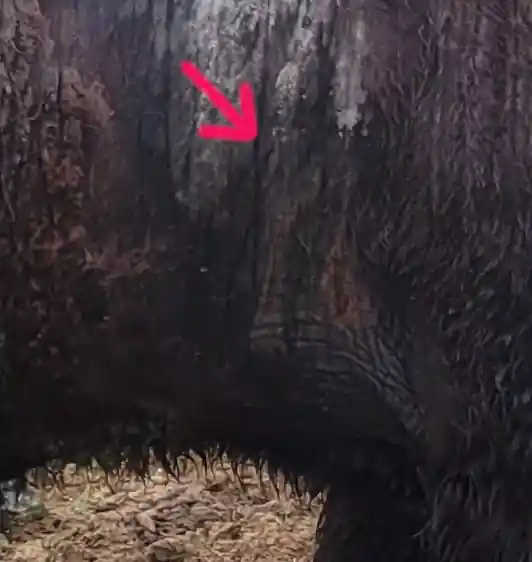
Truck, my old bull loses some of his body hair every year, not all bison do this, but it makes it easier for him to create a sore from scratching with his horns. I keep D.E. out for them all months where its warm and dry.
Impact on Bison
- Infestation Risk: Bison are particularly vulnerable to NWS, especially around wounds. (New World Screwworm)
Symptoms: Signs of infestation include:- Irritated behavior
- Head shaking
- Presence of maggots in wounds
- Foul odor from the wound
- Increased size and depth of the wound
Prevention and Control Measures
- Monitoring: The USDA actively monitors for NWS through traps in areas where bison are present.
- Treatment: If an infestation is detected, treatment involves removing the larvae and treating the wound. Effective treatments include:
- Nitenpyram for quick removal of larvae
- Ivermectin for prevention and treatment
Current Situation
As of now, there have been no reported cases of NWS in U.S. bison, but the risk remains due to the pest’s recent spread in Mexico. The USDA has implemented measures to prevent its introduction into the U.S., including halting imports of cattle, bison, and horses from affected areas.
Awareness and vigilance are crucial for livestock owners to protect their animals from this dangerous pest.
1) Buffalo and Screw Worm
2) History of research and cures
3)Their concern was people panic and may use drugs that we use on internal parasites and there by creating resistance.
Here is a summary of what I found. The screw-worm is the larva of a fly that is twice as big as a house fly. The adult fly lays hundreds of eggs on wounds of warm-blooded animals, particularly livestock and among wildlife, frequently deer. In about 12 hours the eggs hatch into the screwworm maggot, which feeds on the injury and grows to maturity in about five days. It is at this time that its name is acquired: it burrows head down into the flesh and the rings around its body give it the appearance of a half-drilled carpenter’s screw.
𝑵𝒐𝒘 𝒖𝒔𝒖𝒂𝒍𝒍𝒚 𝒈𝒐𝒗’𝒎𝒆𝒕 𝒑𝒓𝒐𝒈𝒓𝒂𝒎𝒔 𝒂𝒓𝒆 𝒂 𝒎𝒊𝒏𝒊𝒎𝒂𝒍 𝒔𝒖𝒄𝒄𝒆𝒔𝒔
𝑩𝒖𝒕 𝒕𝒉𝒆 𝒐𝒏𝒆 𝒕𝒉𝒂𝒕 𝒔𝒕𝒐𝒑𝒑𝒆𝒅 𝒕𝒉𝒆 𝒔𝒄𝒓𝒆𝒘-𝒘𝒐𝒓𝒎 𝒉𝒂𝒔 𝒅𝒂𝒏𝒈 𝒔𝒉𝒐𝒓𝒆 𝒑𝒂𝒔𝒔𝒆𝒅 𝒕𝒉𝒆 𝒕𝒆𝒔𝒕
𝑪𝒂𝒖𝒔𝒆 𝒊𝒕 𝒑𝒖𝒔𝒉𝒆𝒅 𝒕𝒉𝒆 𝒄𝒓𝒊𝒕𝒕𝒆𝒓 𝒔𝒐𝒖𝒕𝒉𝒘𝒂𝒓𝒅 𝒂𝒏𝒅 𝑰 𝒉𝒐𝒑𝒆 𝒉𝒆’𝒔 𝒕𝒉𝒆𝒓𝒆 𝒕𝒐 𝒔𝒕𝒂𝒚
𝑯𝒆𝒓𝒆’𝒔 𝒕𝒐 𝒕𝒉𝒆 𝑴𝒊𝒔𝒔𝒊𝒐𝒏 𝑭𝒍𝒚 𝑳𝒂𝒃 𝒂𝒏𝒅 𝒕𝒉𝒆 𝑼.𝑺.𝑫. 𝒐𝒇 𝑨.
It appears from what I found that the screw-worm problem has been at least temporarily alleviated. Perhaps that legislator is right: we don’t need any more screwworm related research. Indeed we do need oversight of governmental operations, but I still fear that important federal programs like the one I have described might die as the result of such uninformed sound bites. Source Full Text https://buffalonews.com/news/
Asbury Park Press (Asbury Park, New Jersey) Jul 12, 1959
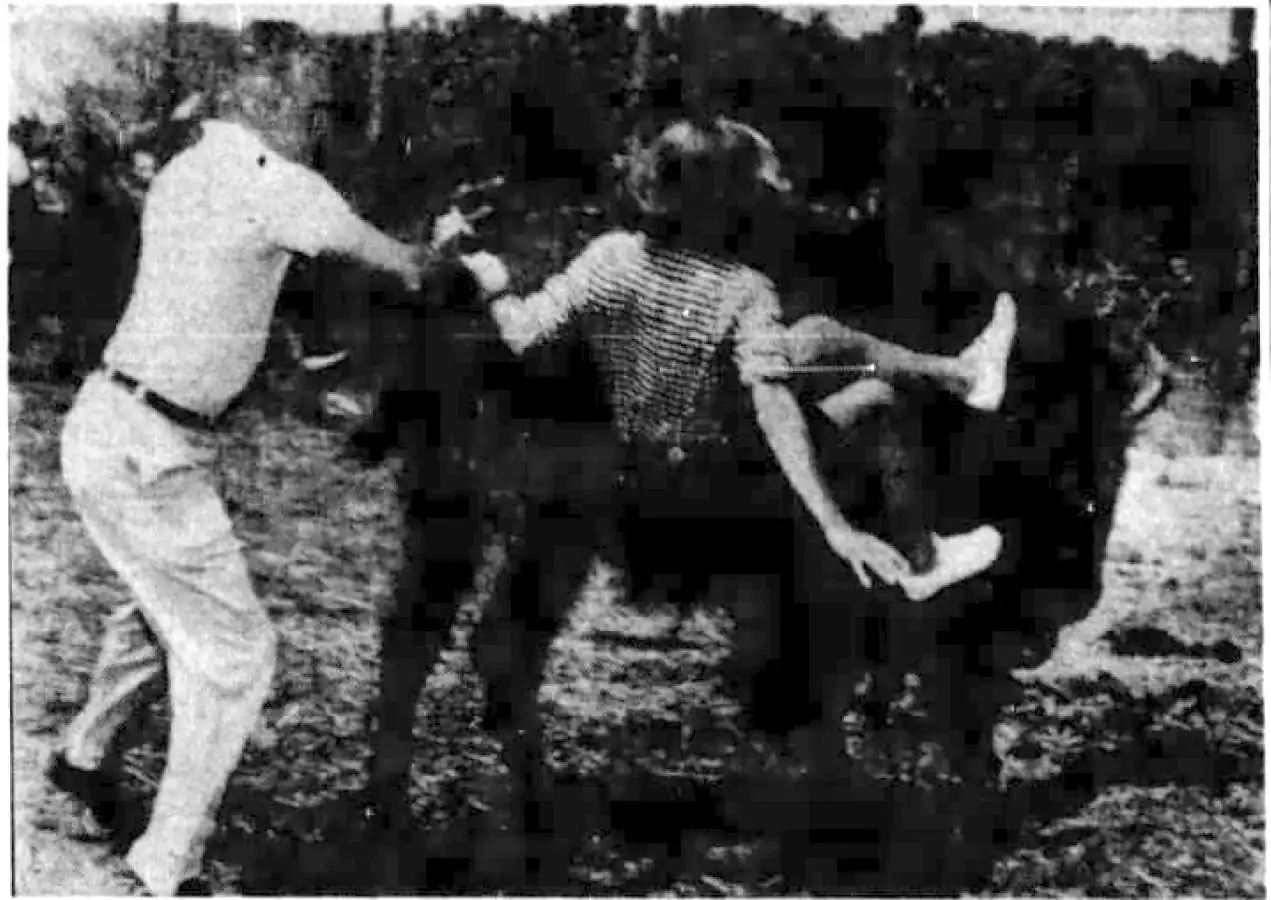
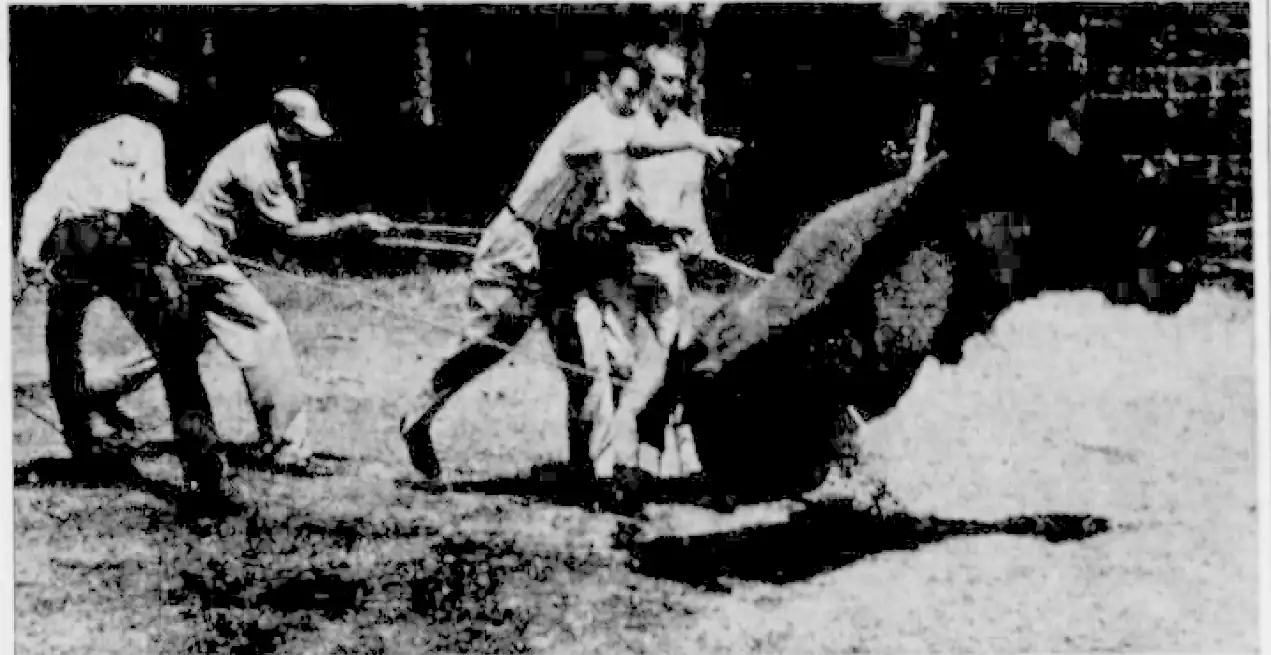
The Lawton Constitution, Sep 19, 1950 Wichita Refuge
Cattlemen of Southwest Monday were hoping for at least an average winter, which they believe will prevent a recurrence next year of the states worst attack by screw worms. for at least an average winter, vent a recurrence next year screw worms.
The pests have trimmed thousands of dollars in profits from area livestock this season, its estimated. The infestation has resulted in reduced weight of the animals.
The worms have been reported damaging numbers all the way the north border of Oklahoma, south to the Rio Grande River. Farmers and stockmen have had a careful watch on keep the livestock to prevent a serious loss of life.
Feeds On Stock
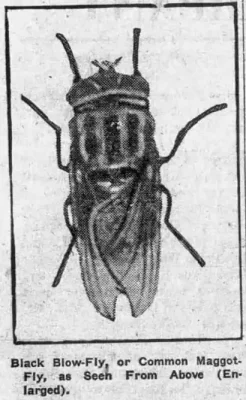
The screw worm is hatched from an egg, laid by what stockmen call a blow fly. The fly is about the of size a normal house fly.
It lags its eggs in the blood of an animal usually selecting an open wound.
The egg hatches in the animal warmth and the worm bores immediately into the live flesh, where it thrives on the body of the animal for several days until it matures. Then it drops out of the wound and onto the ground, where itself a hole in the earth. Twenty- one days from the day it was deposited as an egg it becomes fly, ready to lay some eggs itself.
Rate Quadrupled
Wayne Rowe, prominent cattleman northwest of Lawton, said the infestation this year has been at least four times greater than normal. He termed it the worst he has ever seen.
However, the big hope of cattlemen is based upon the assurance of experts the fly does not recur year after year in the normal climate of Oklahoma. It requires A much warmer winter for existence.
Last winter was extremely mild it is recalled. Flies which migrated this area were able to survive the cold. Normally, screw worms are not a problem except in the warmer regions, such as south Texas.
Weight Suffers
Cattle which have grazed last spring and this summer in brushy grazing land has been especially subjected to the screw worms.
They suffer more cuts than usual when they walk under the brush and shade afforded by trees is advantageous for the breeding of the flues.
One cattleman said he examined a herd in a single pasture and found 15 per cent of the cattle infested with screw worms. He said didn’t lost any stock, but he is sure the gross weight of the herd was reduced greatly.
Refuge Herds Hit
It has been necessary this season to treat each newly born calf, likewise the calf’s mother. Failure to treat them would mean almost certain death for the animals.
Livestock science has provided methods of treating which are practically 100 percent in their effectiveness. County, Farm Agent Ted Krisher will give detailed information to any stockman needing recommended treatments.
The Wichita Mountains Wildlife Refuge had felt the worms along with the cattlemen.
The refuge has lost five head of stock. There have been 100 cases of screw worms among the Buffalo and Longhorns.