A Bison’s First Teeth
Ever wonder how buffalo eat without upper front teeth? Buffalo calves aren’t born with a full set of adult teeth. Instead, they start with baby teeth – 20 of them, to be exact. But here’s where it gets interesting: these little ones have all their front teeth on the bottom jaw, with none up top. Instead of top front teeth, they have a tough pad on their upper jaw covered in the same material as our fingernails – keratin. This pad works with their tongue to grab and pull grass, making them incredibly efficient grazers. The outer layer of their teeth is enamel – the hardest substance in their body. Under that is dentin, which acts like a shock absorber, and at the core is the pulp, full of blood vessels and nerves that keep the tooth alive.

Each side of their mouth packs three grinding teeth, working together like tiny mills to break down grass and plants. The eight front teeth act like natural scissors, helping these fuzzy youngsters snip and tear vegetation. It’s a perfect setup for a baby buffalo’s first adventures in grazing. This temporary tooth arrangement isn’t just random – it’s brilliantly designed for a growing buffalo’s needs. Think of it as nature’s starter kit, helping them master the art of eating before their permanent teeth come in.
How do buffalo turn tough prairie grass into dinner? The dental pad as mentioned above, is a tough surface that works with their bottom teeth to slice through vegetation like a pair of garden shears. That’s just the beginning of their remarkable digestive journey. When a buffalo takes a bite, they’re not just chewing and swallowing like we do. They’re starting a complex process. That mouthful of grass gets partially chewed, mixed with saliva, and sent down to their four-chambered stomach – nature’s version of a food processing plant. Here’s where it gets really interesting: the food doesn’t just stay down there. The buffalo brings it back up for round two (and three, and four) of chewing, each time breaking it down further. Scientists call this rumination, but you might know it as “chewing the cud.”
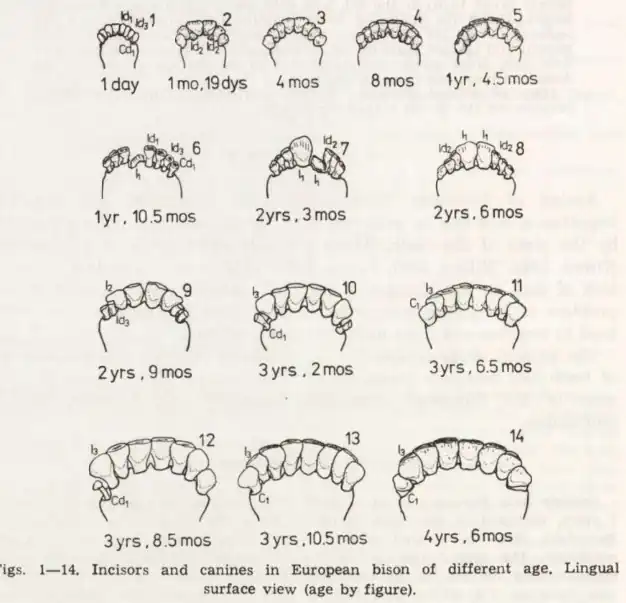
As young buffalo grow up, they gradually swap their baby teeth for permanent ones, starting with their lower front teeth around their first or second birthday. By the time they’re five, they’ve got their full adult set – perfectly designed for a lifetime of turning prairie grass into buffalo power.
Picture the perfect grass-eating machine. That’s exactly what evolution created when it designed the buffalo’s mouth. These prairie giants pack quite the dental setup – it’s way more interesting than you might think.
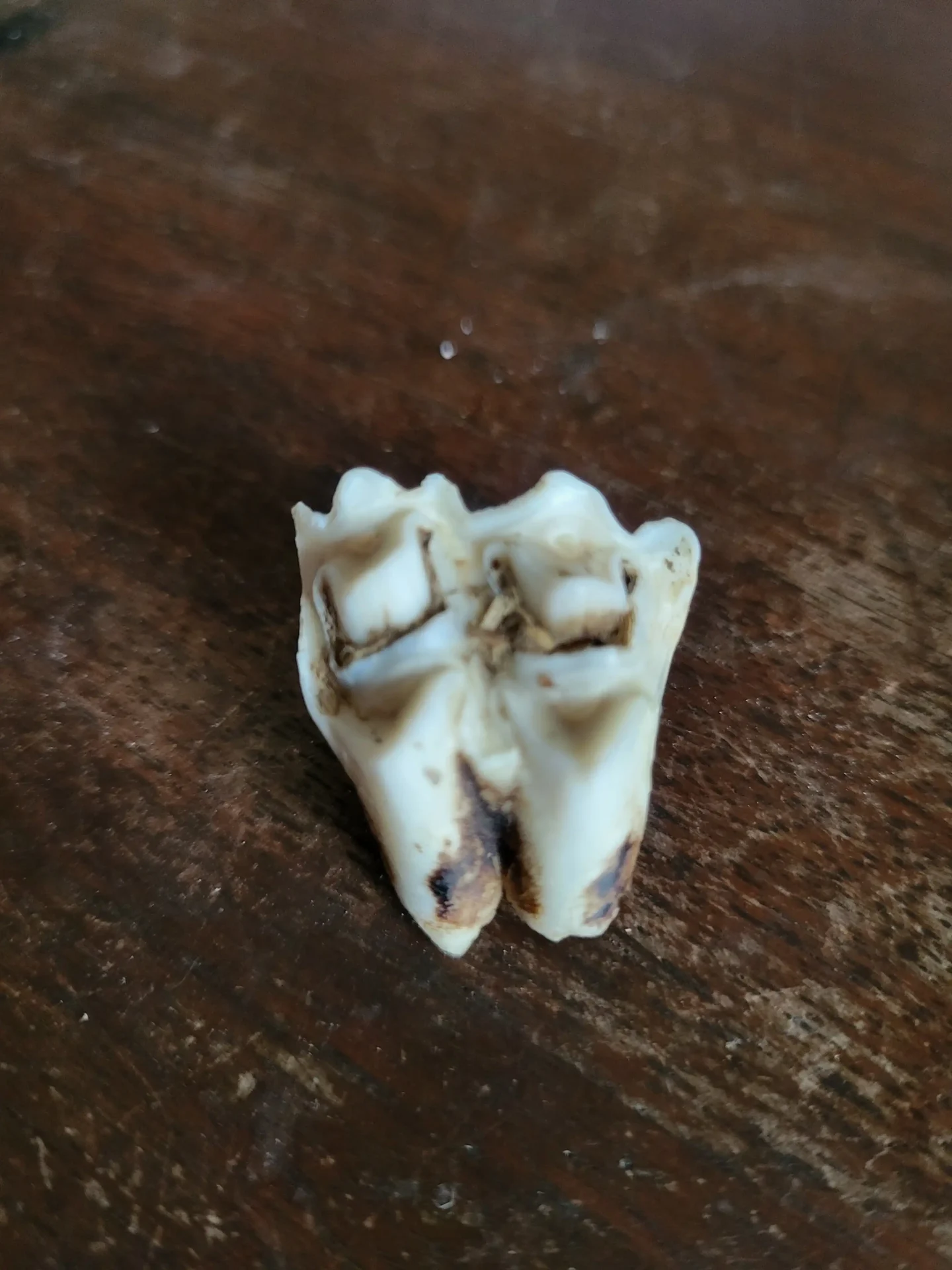
Behind this grass-cutting setup sits twelve premolars and twelve molars working together like nature’s millstones, turning sturdy plant fibers into digestible bits. These aren’t your average flat teeth either – they’re crowned with ridges and valleys. Each tooth is reinforced with multiple layers of enamel, making them tough enough to handle years of grinding through some of the most abrasive plant matter nature can throw at them.

But even these super-teeth aren’t immortal. Like old grinding stones, buffalo teeth slowly wear down over time, telling stories of countless meals across the prairie. Scientists can actually read these wear patterns like a diary, revealing secrets about what these magnificent creatures ate and how they lived. It’s a testament to nature’s engineering – every ridge, every curve, every tooth perfectly placed for a lifetime of turning prairie grass into pure buffalo power. Now that’s something to chew on.
I’d like to thank L.C. Todd for helping me with some images and explanations.
Since the front teeth almost never stay in place in mandibles we find archaeologically, I seldom pay much attention to them, but in terms of the cheek teeth, at birth, the 3 deciduous premolars are erupted, and then the three permanent molar erupt during the first couple years of life and then at about 2 years old, the deciduous premolar are replaced with the permanent. Here an illustration we did of bison mandible tooth eruptions based on x-rays of known age at death animals in the University of Wyoming collections. So for in terms of permanent cheek teeth, there would be 12 premolars (6 mandible, 6 maxilla) and 12 molars M1-M3
 the deciduous premolar are replaced with the permanent. Here an illustration we did of bison mandible tooth eruptions based on x-rays of known age at death animals in the University of Wyoming collections. So for in terms of permanent cheek teeth, there would be 12 premolars (6 mandible, 6 maxilla) and 12 molars M1-M3
Here’s the eruption pattern of the incisors and canines.