Bison Anatomy Bison Ecology Did you know? (Odd facts)
Bison Parasitology Bison Speak (behaviors) Bison Biology Buffalo Bones Collection
Bison’s First Teeth Bison Aging by Skulls
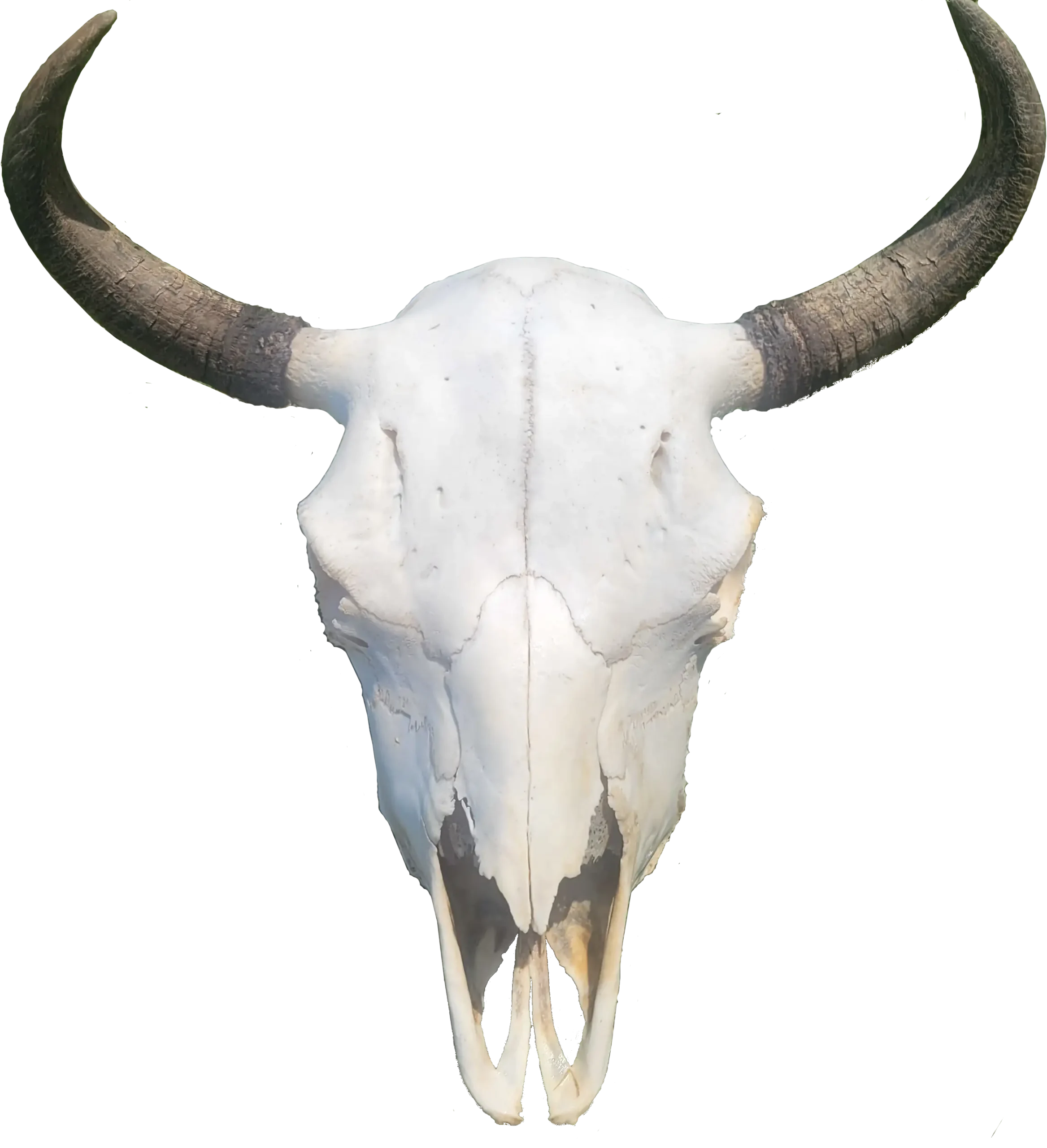
“The calf follows its mother until it is a year old or is displaced by the advent of another. It continues to grow until it is seven or eight years old and usually reaches the age of twenty-five or thirty years, although buffalo have been killed which, judging from the rings upon the horns and other signs of age, must have been close to fifty years old. At first the horns on the male are a straight spike and he is known as a “spike bull” but about the end of the seventh year when he reaches full maturity the horns have their full semicircular curve.” Garrettson
“Annual growth rings are too difficult to detect to be of much value as age indicators.” W.A. Fuller
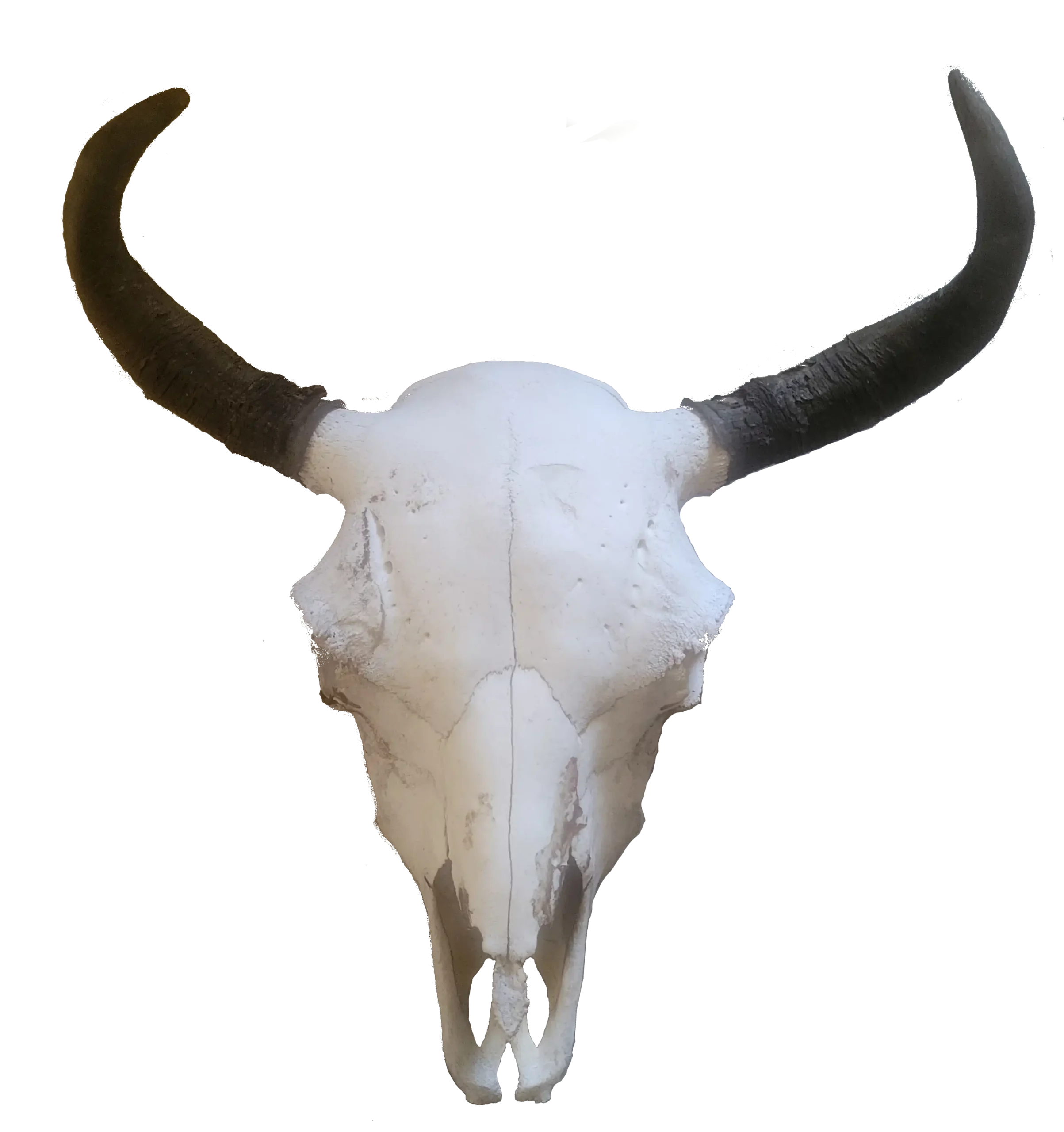
As the horn grows from the base, variations in growth rate— influenced by factors like nutrition, health, stress, or seasonal changes—can produce visible wrinkles, ridges, or rings, often most noticeable near the base in mature animals and sometimes extending toward the tip. These are commonly called growth rings or annuli. In older bison, especially cows, the base often shows pronounced wrinkling and roughening in a ring-like pattern. Many people, including bison managers and enthusiasts, use these rings as a rough, non-invasive clue to estimate age—somewhat similar to tree rings—particularly in some mature females, where they can be more distinct. For example, a mature cow might display multiple rings starting from the base. However, experts note several limitations: – Rings are not as reliable as counting teeth (dental aging or “mouthing”), which is considered the most accurate method. – False rings (extra annuli from stress or other factors) can appear, especially in older animals, leading to over- or underestimation. – In scientific studies, horn rings have proven difficult to count consistently and correlate poorly with exact age in some classes (e.g., underestimating young animals and overestimating older ones).
Personally, judging age by horns rings I think is just a broad guess. Bison have too much wear on their horns and their hair covers the whole base and as mentioned above life can effect horns changes, I imagine much like a horses hoof.
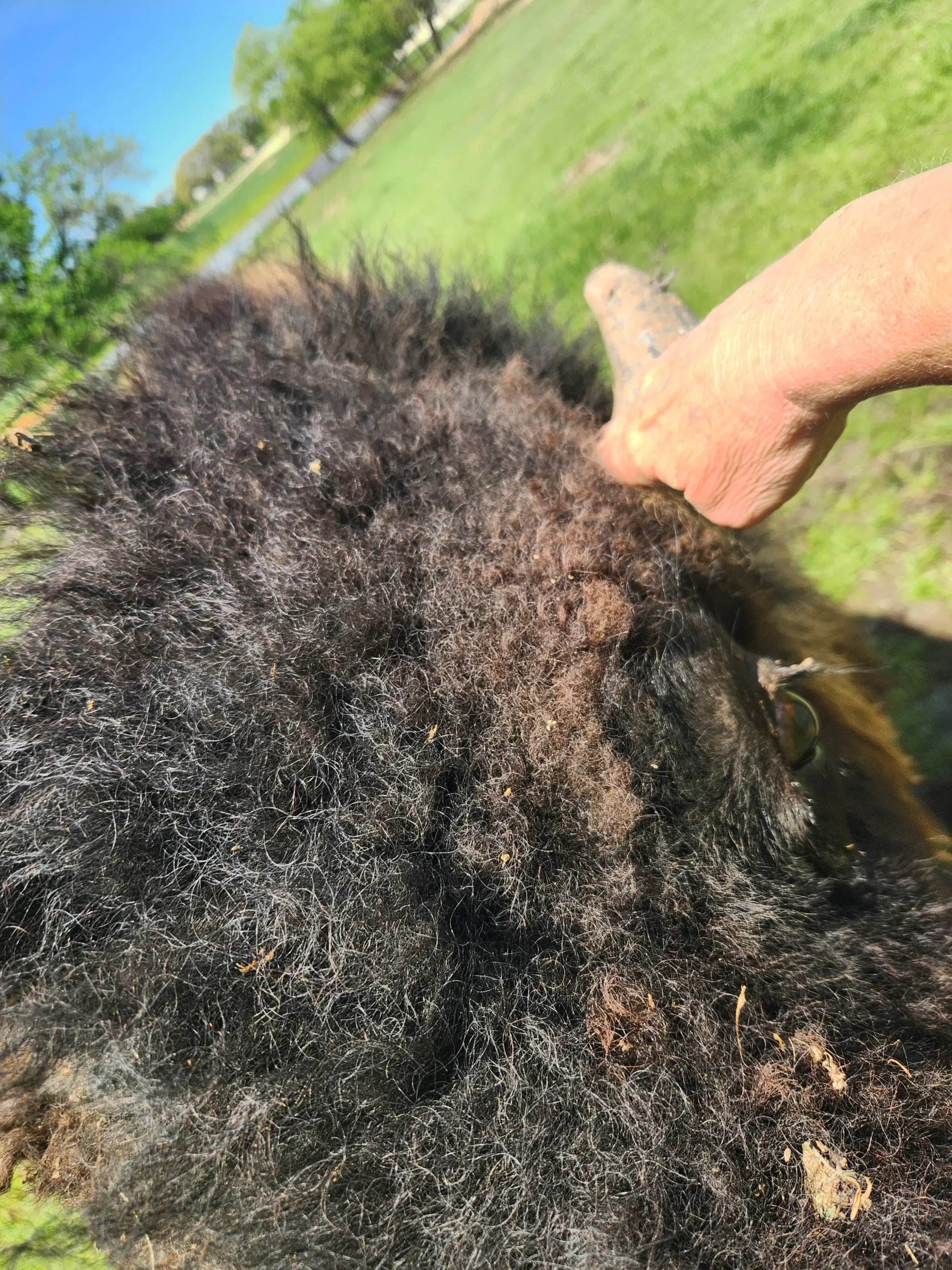
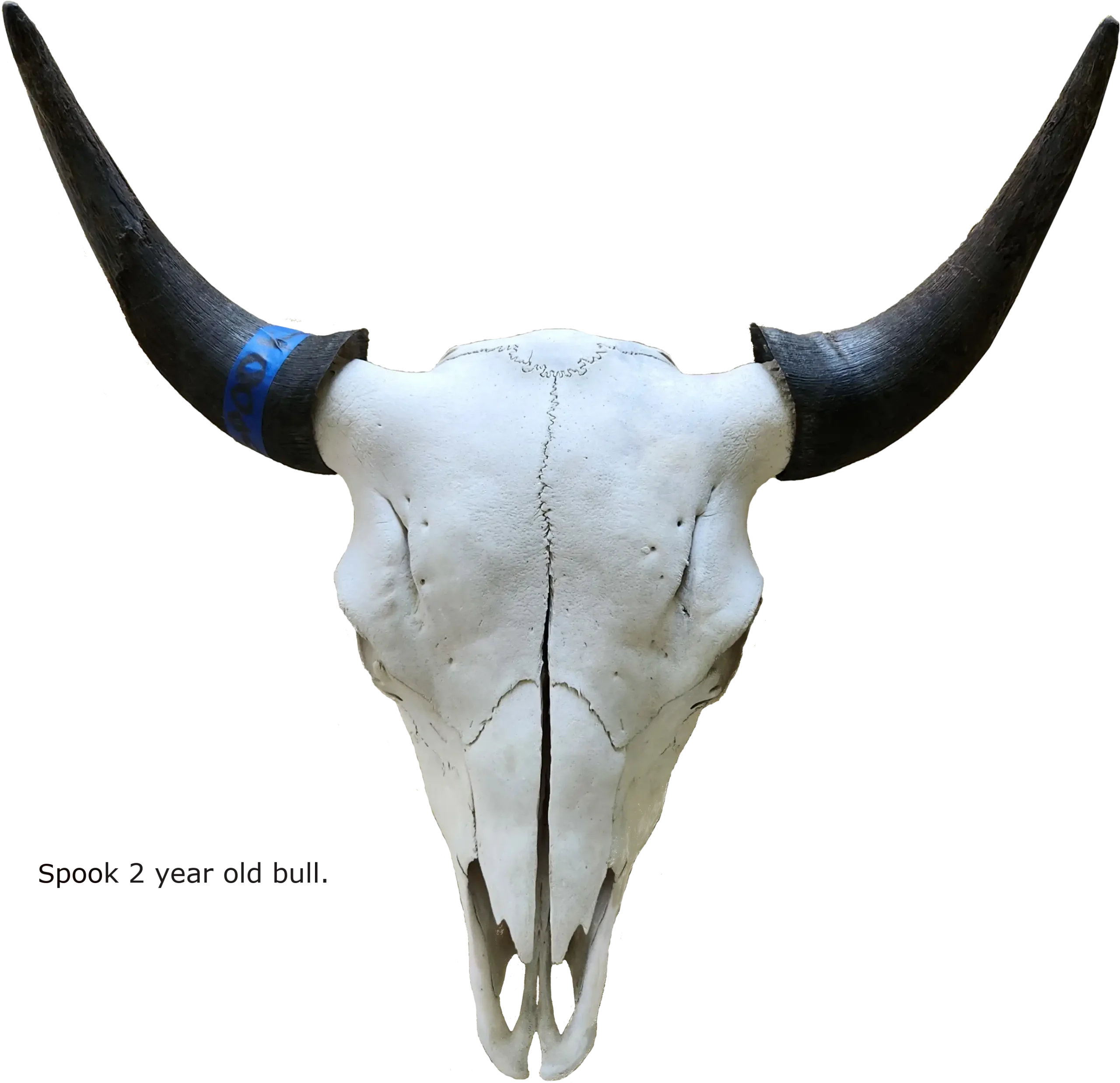
He already is developing a ring on the both horn caps. (the left horn ring is under the tape) I tried to look up when they develop their first ring and that answer was all over the place, from 2 years of age to five years.
Wesley, being a year older than this young bull, I checked his horns for a growth ring. Nothing….yet.
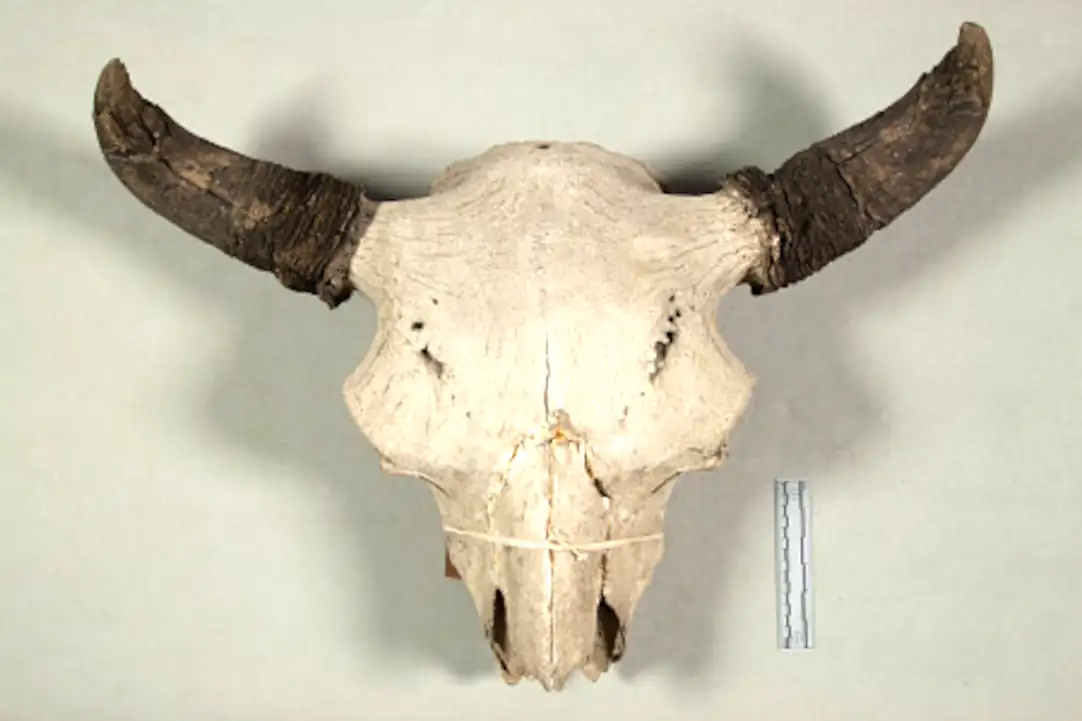
This was an image shard by the Smithsonian. “Sacred Bison Skull” donated by Chubbuck in 1913. The card reads “It was set up in front of the tepee of a Chief.” From the Lame Deer Agency, Northern Cheyenne Reservation. If you can zoom in on him by a couple clicks, you can see all the horn wrinkles, one right on top the other. So he appears to be old by the change in the eye sockets. His horns also appear to be very worn on the tips.
Record ID nmnhanthropology_8381905
Aging of the skull bones: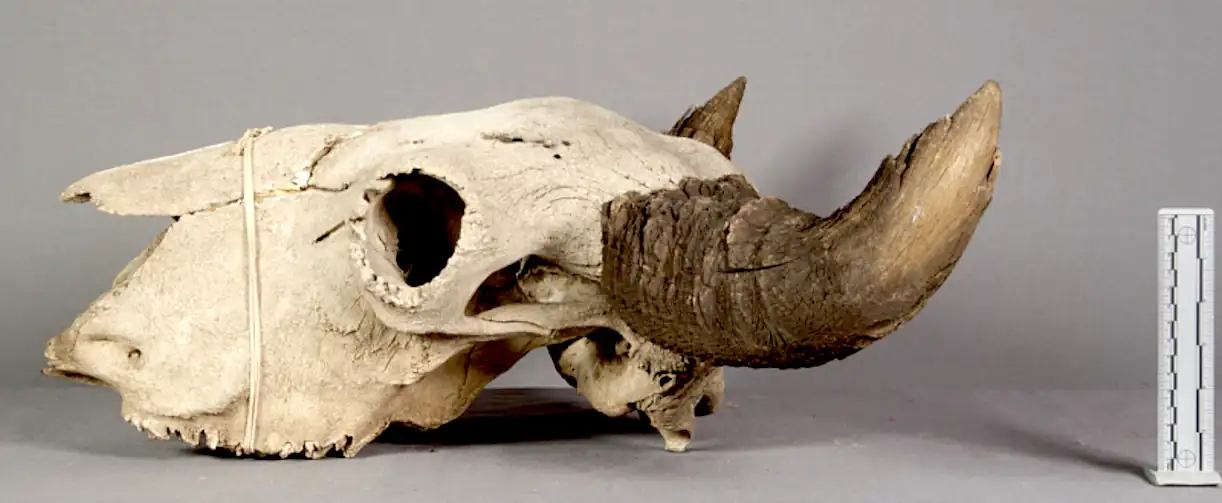
If you look at the eye socket (orbit) they change over time and the sockets themselves are no longer smooth as you would see in a young bison. The same with the horn core where it meets the skull, notice all the new little bumps and valleys, the points are very rough. Some of these changes are very sharp. These changes appear with age.
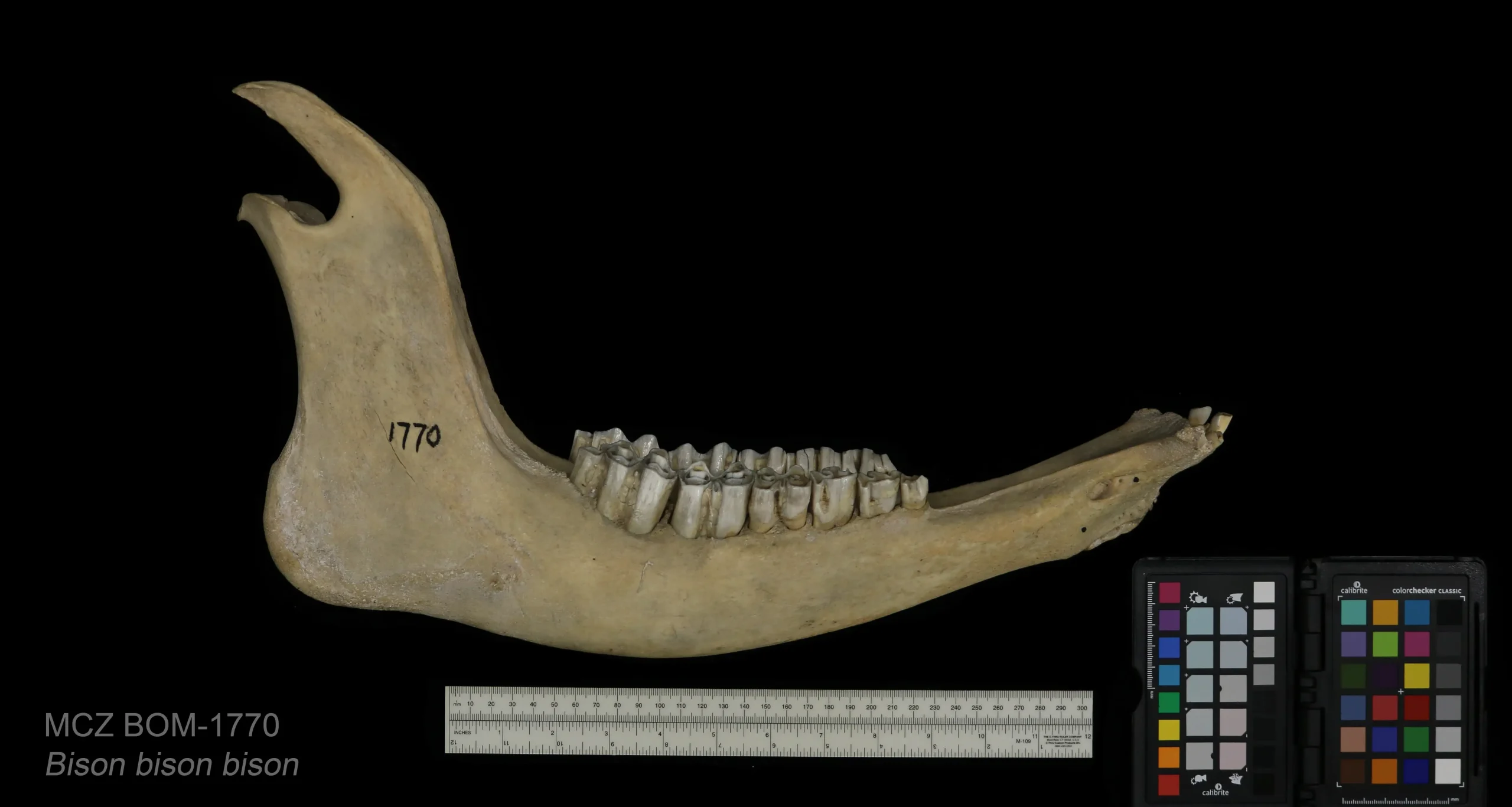
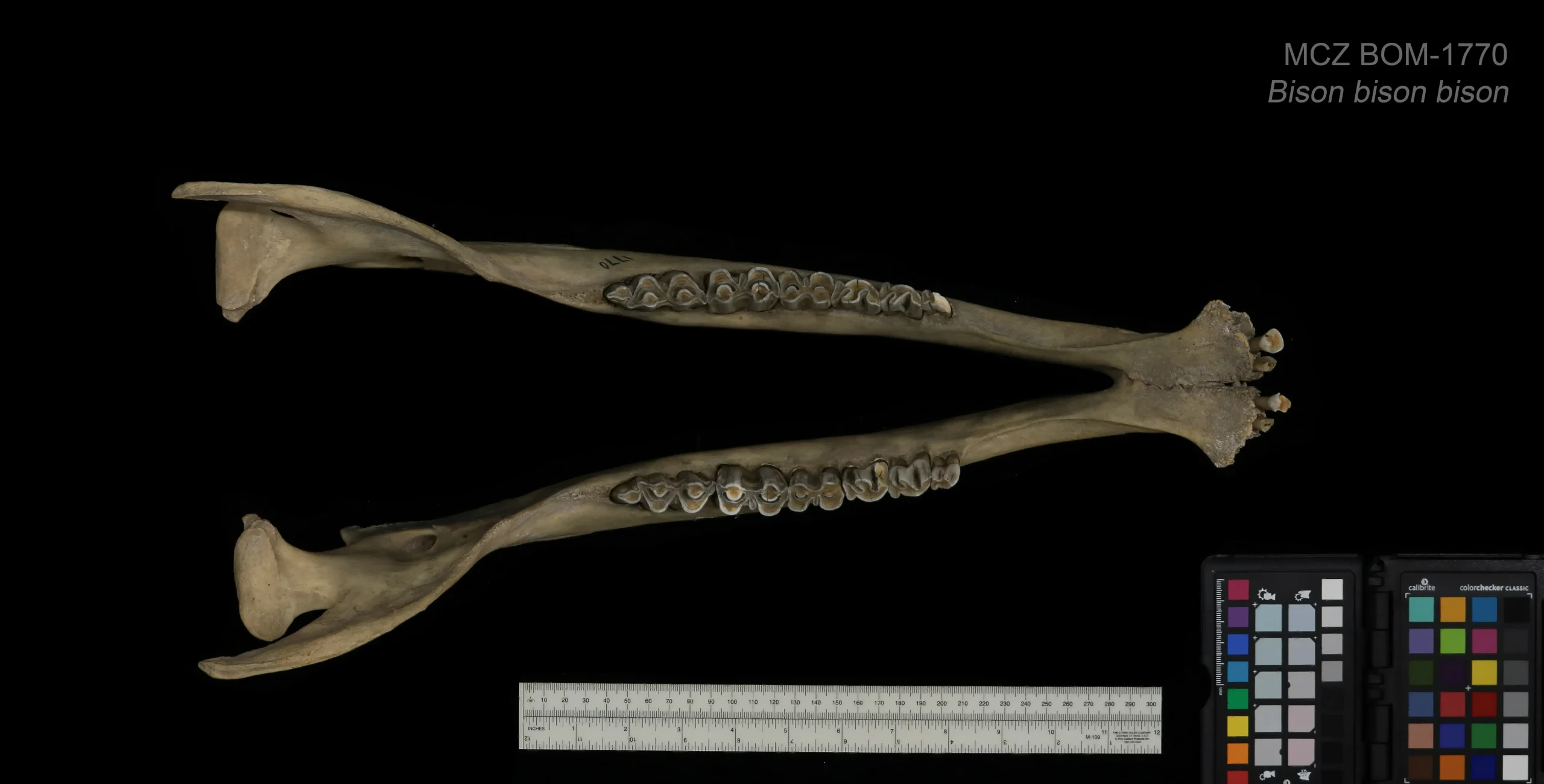
This bull skull was 12 years old at the time of his death (1871/1872). These images are from Museum of Comparative Zoology – Harvard -I appreciate them so much for going to the trouble to find this guy for me. (click to zoom)
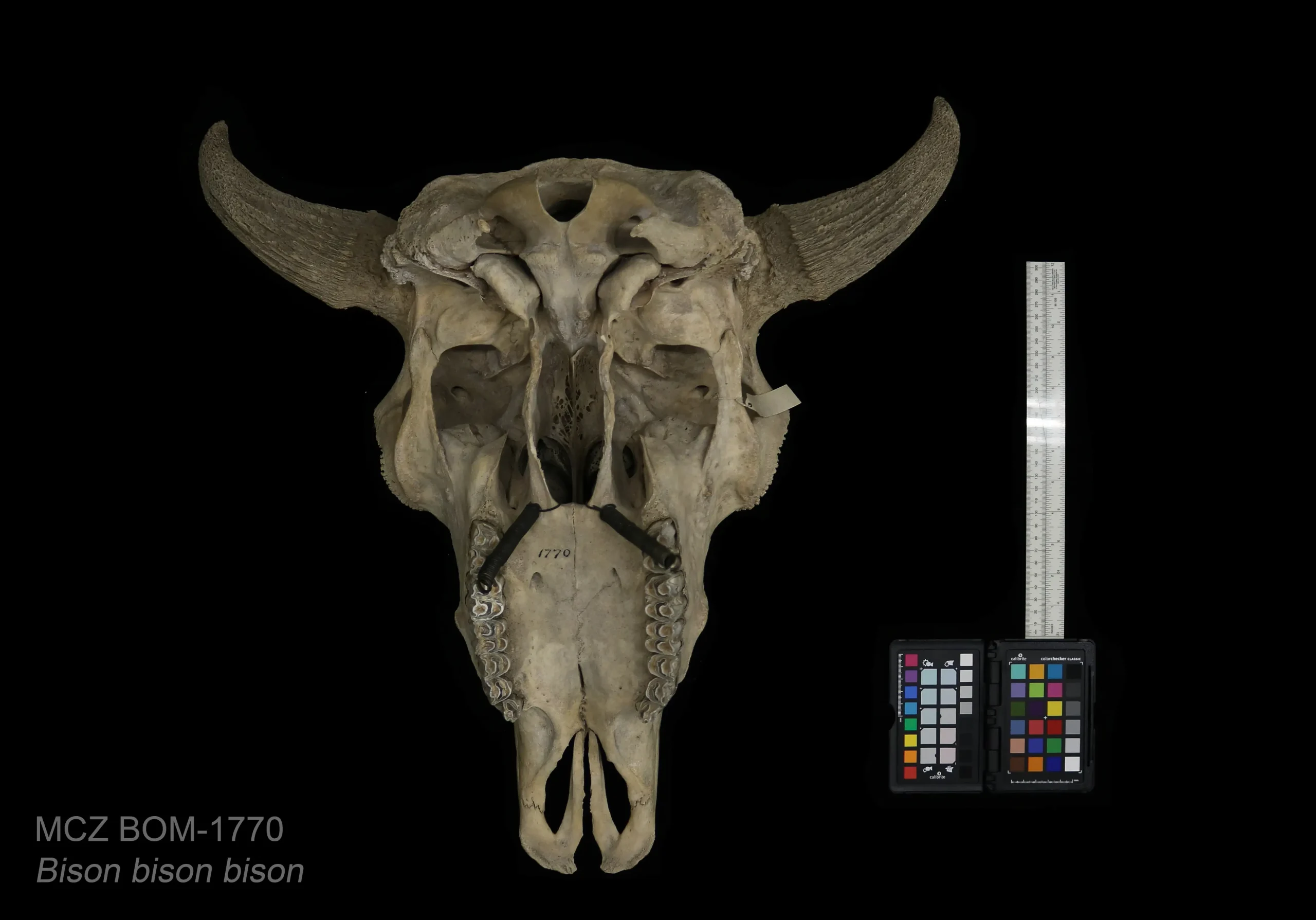
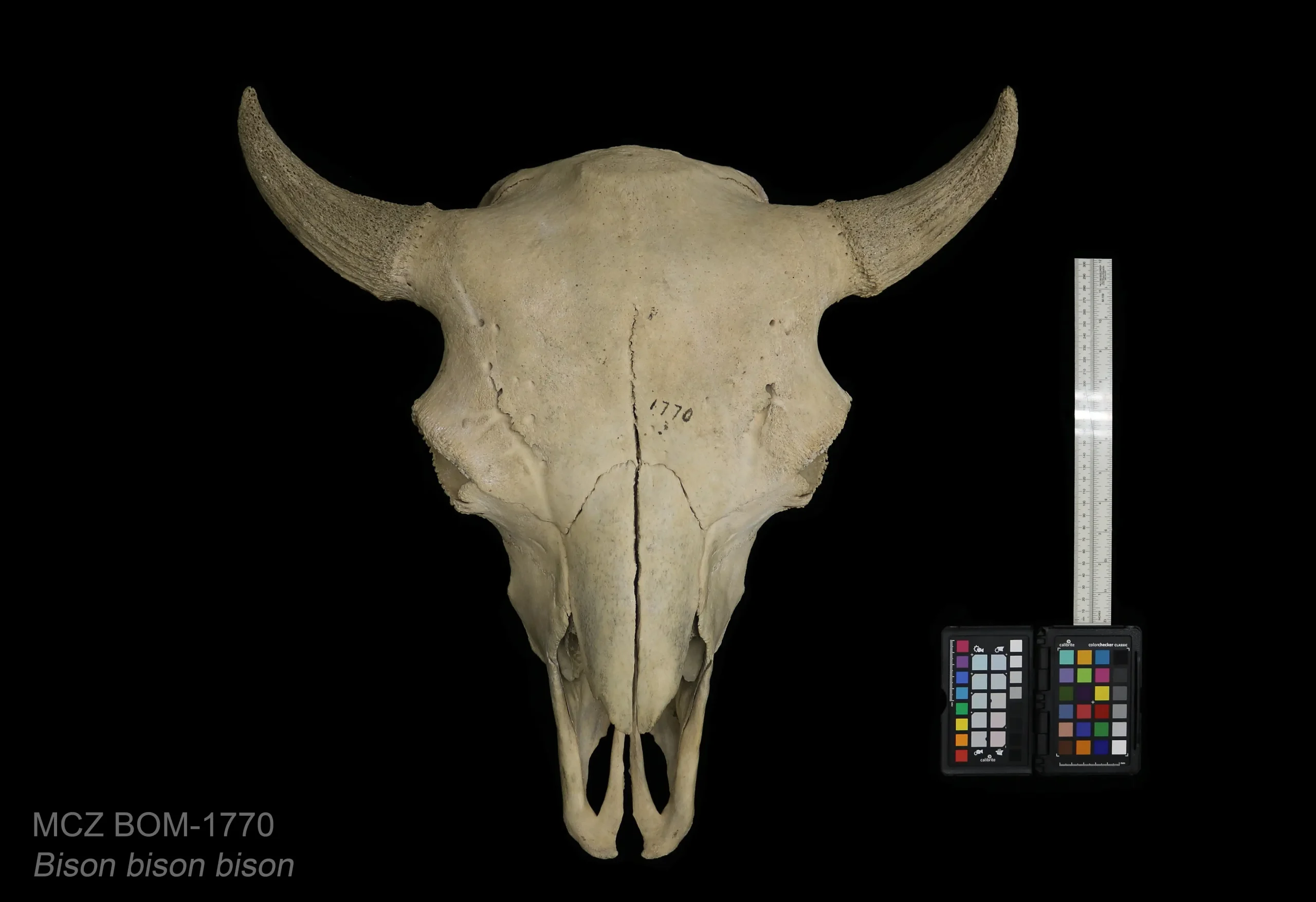
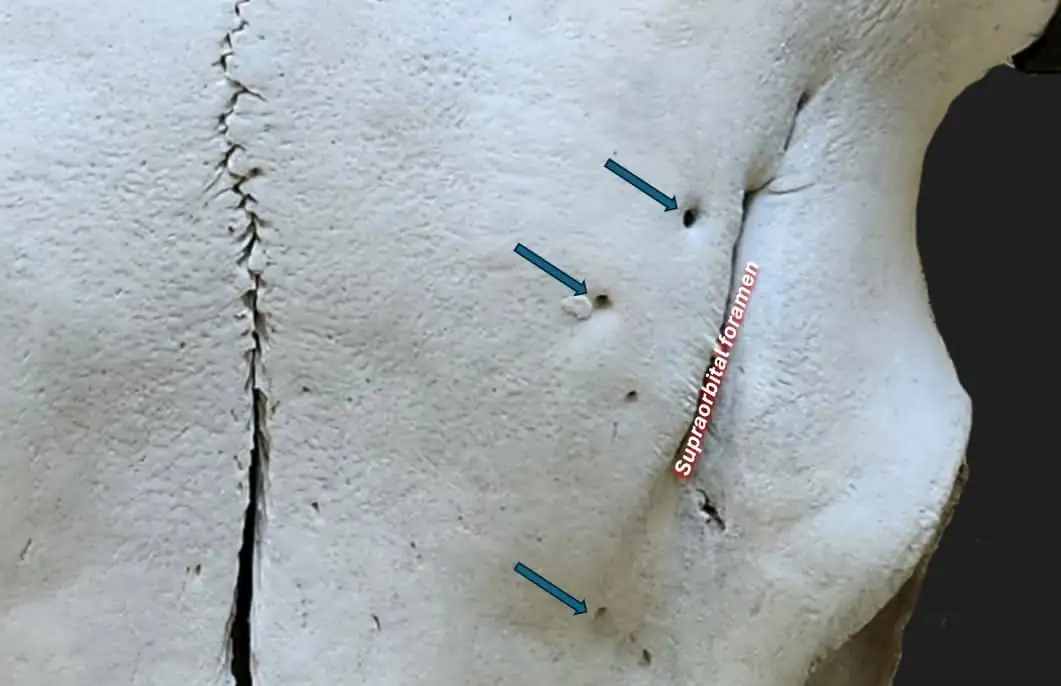
L.C.Todd -The larger one is the supraorbital foramen. The smaller ones are sort of generic “nutrient foramina” or “accessory supraorbital nutient foramia” or just a very simple “samll frontal foramina” or “minor foramina.” The number of foramena is not age related, but the size seems to be with older individuals often showing more pronounced or enlarged openings due to biological remodeling. If I were giving you a sort of overview it would be: several small foramina are present on the frontal surface; these are variably expressed in number and position and are not assigned to specific anatomical categories.
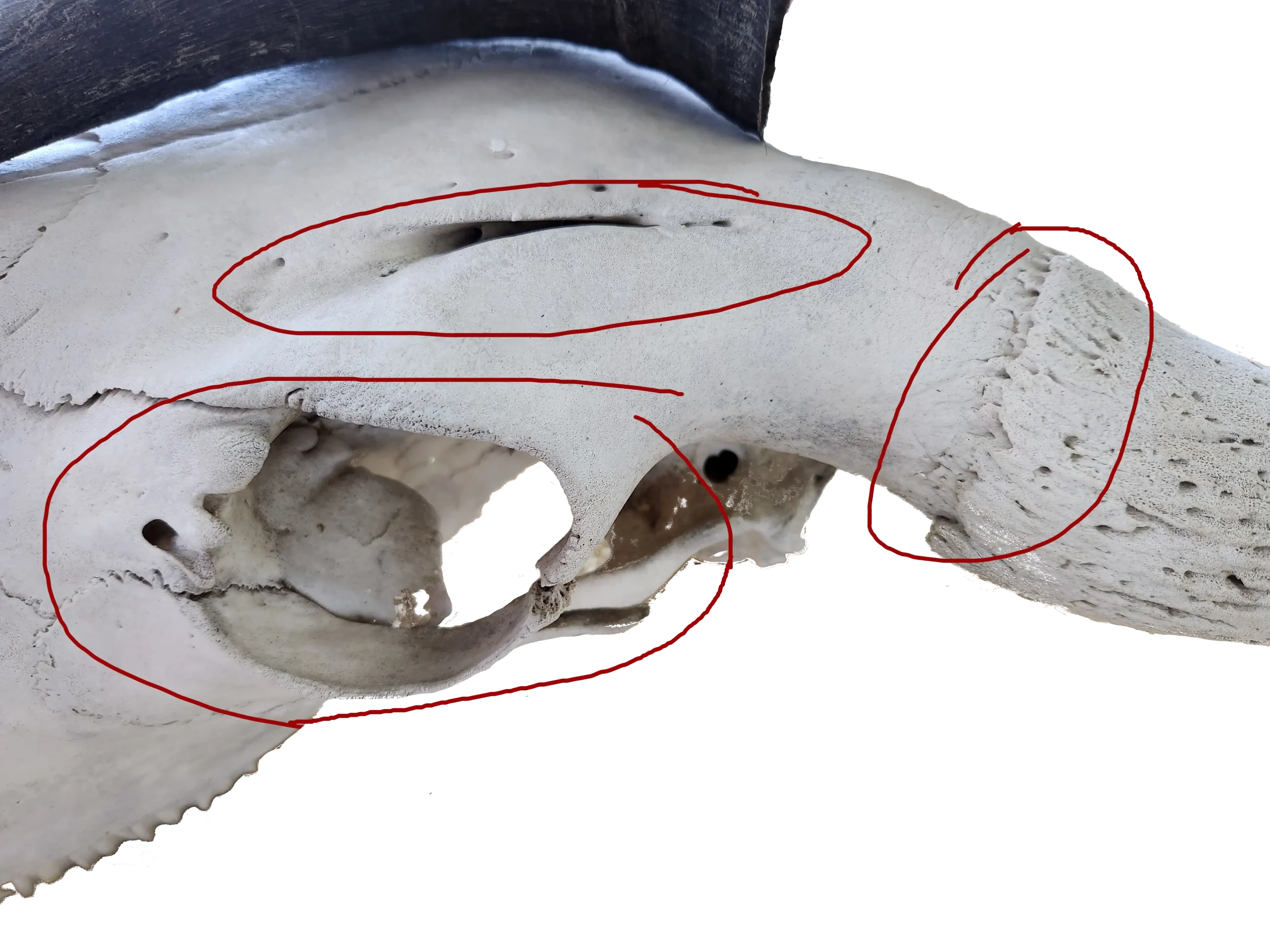
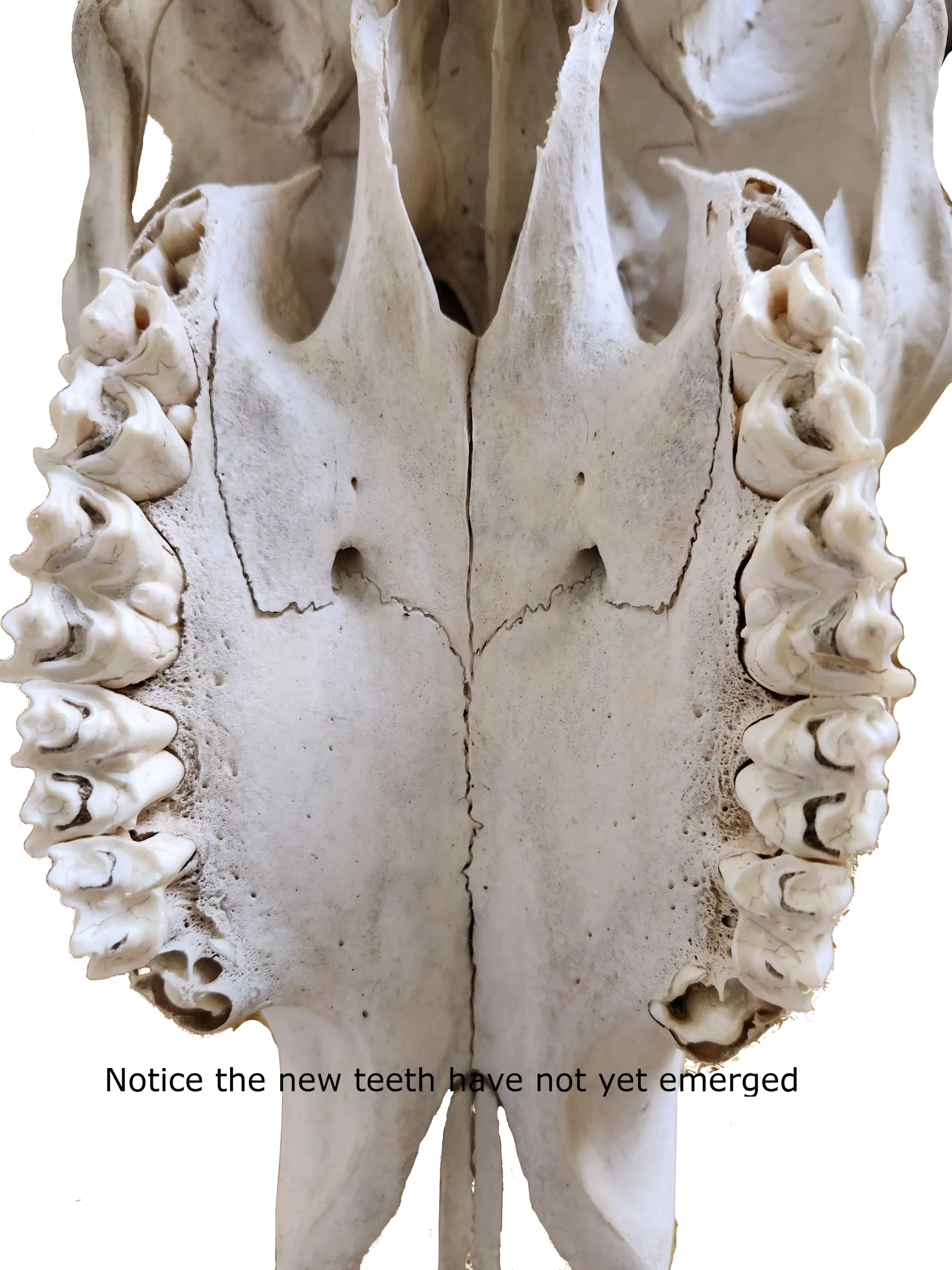
Spook was a 2yo, when he died, but notice how all the edges are smooth. Around the nasal and eye sockets, even the horn core has not yet developed the grooves like an older bull.
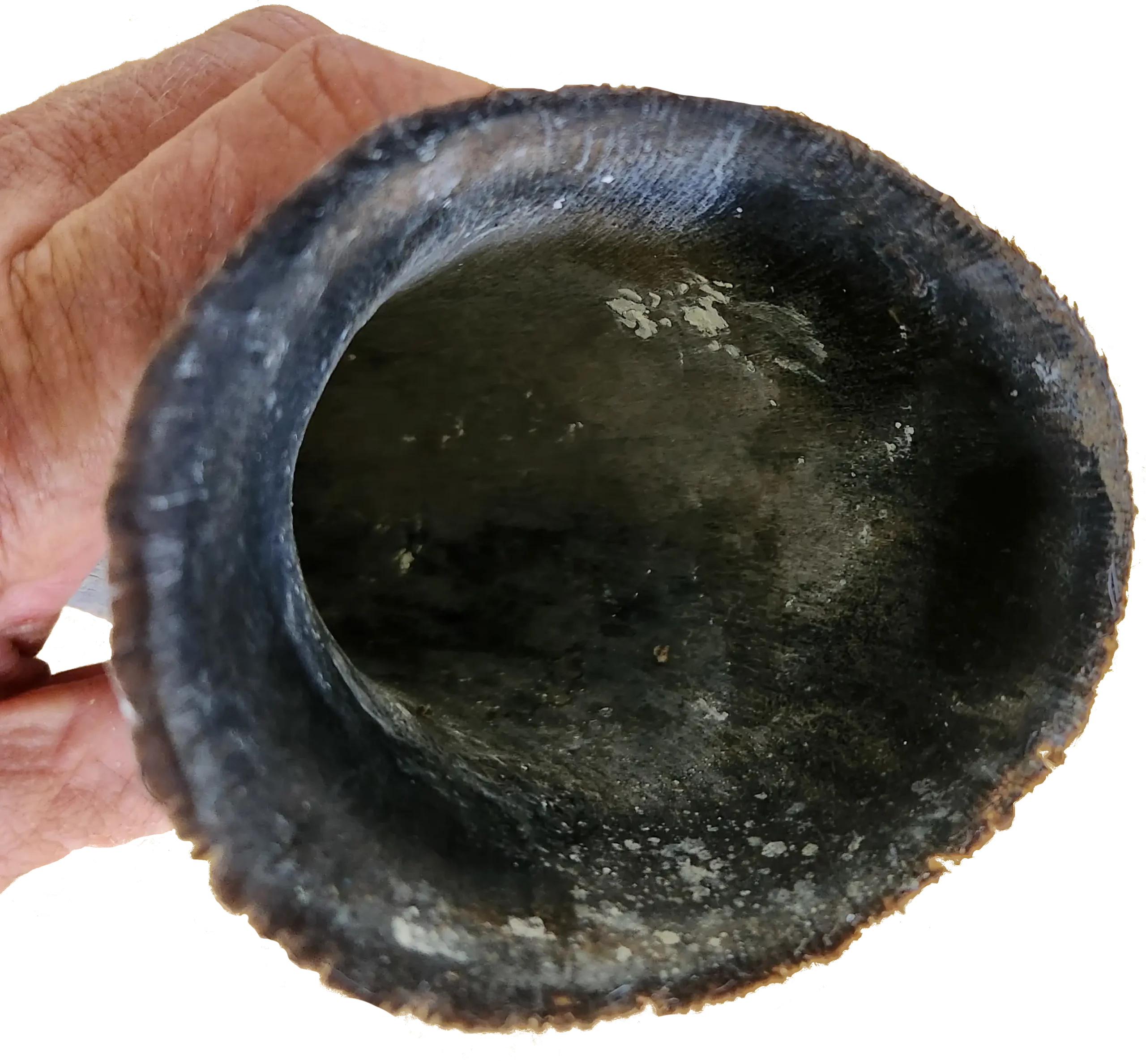
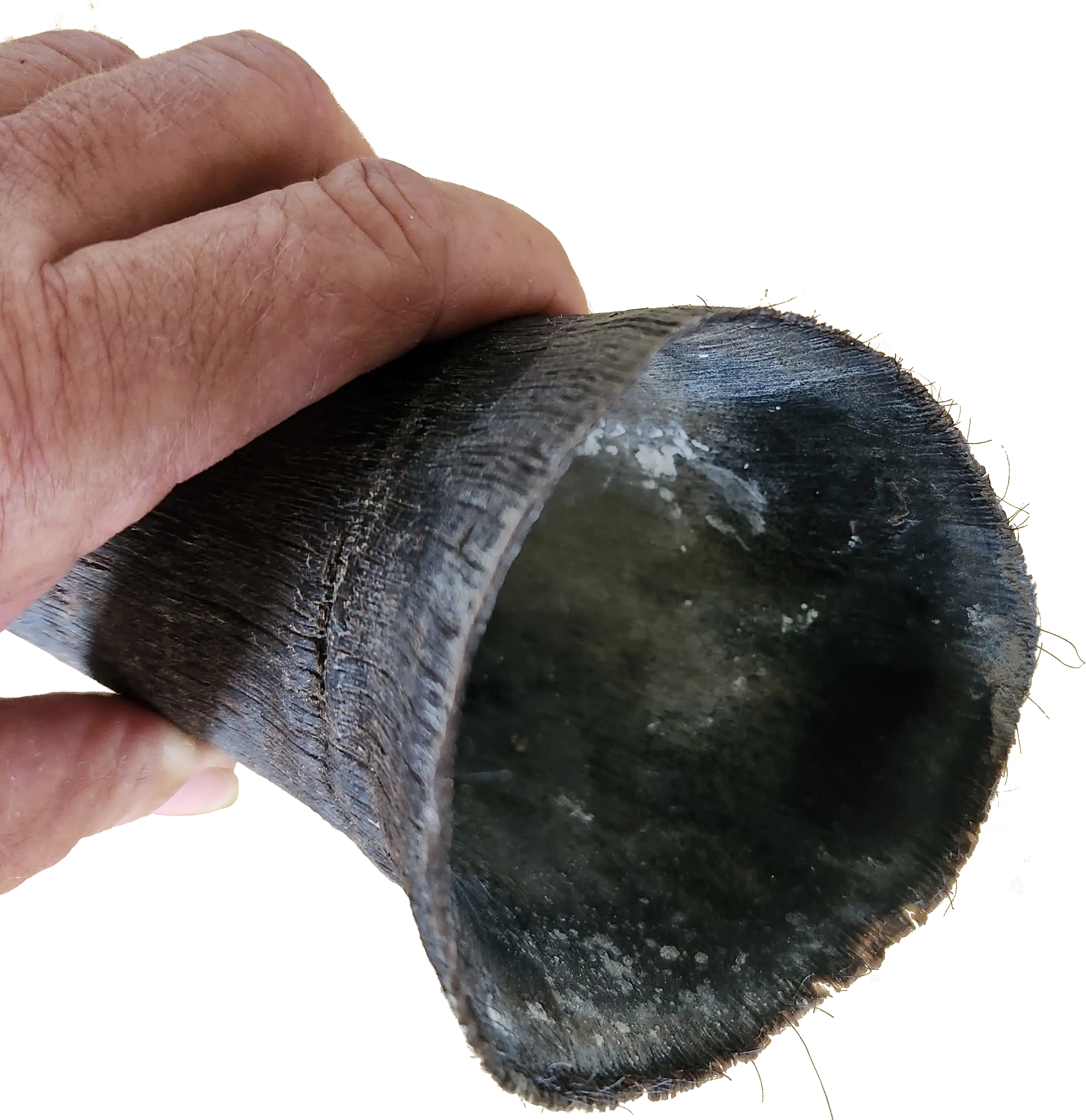
This horn cap has not yet been cleaned, there is no blood build up.
Probably a little dirt in there and that white stuff will clean up.
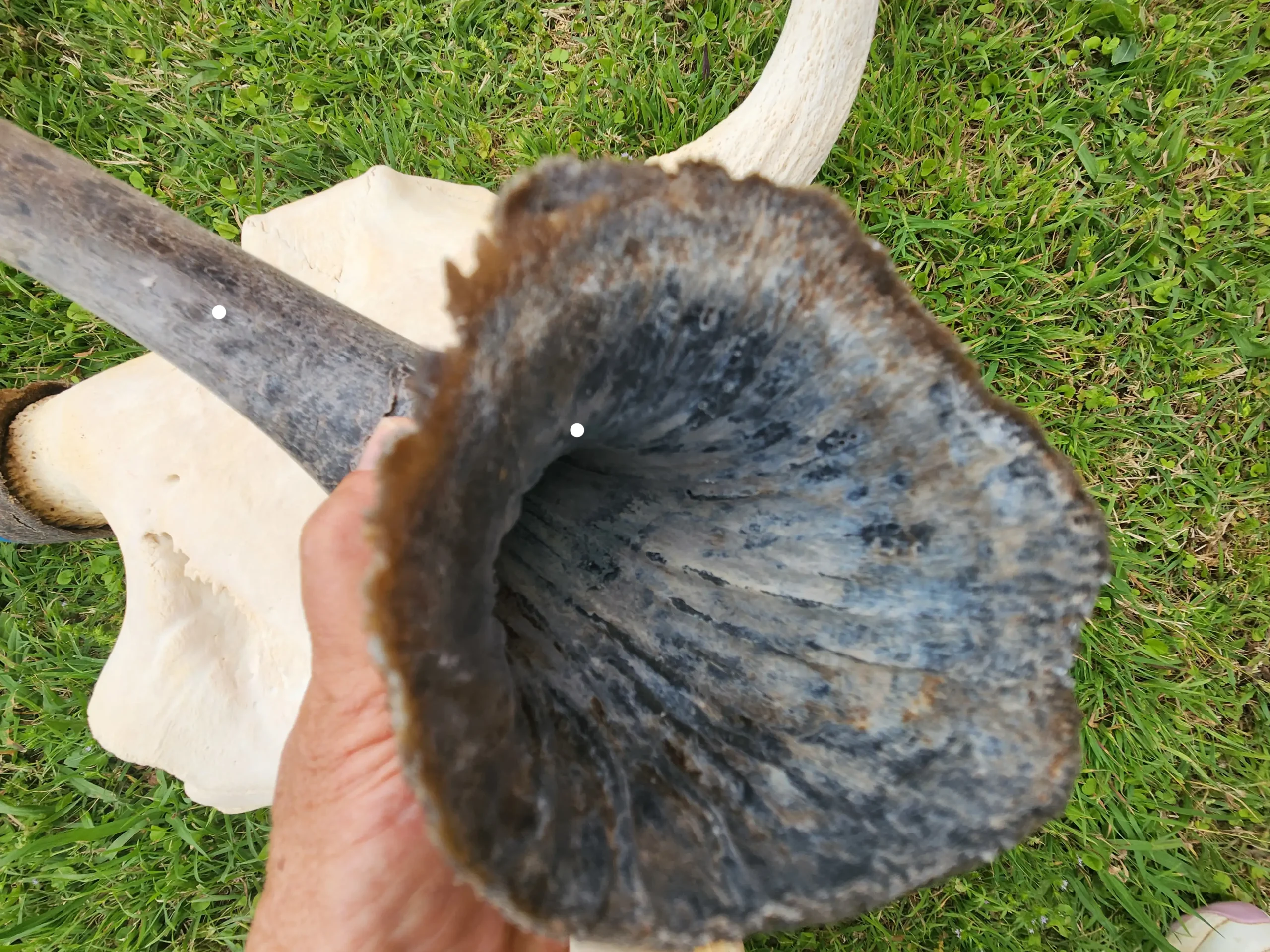
In this older bulls horn cap, you can see the grooves inside the horn cap. these match up with the grooves on the horn core. Just like the loose teeth fit only where they are suppose to on the individual skulls and the lower jaw and teeth matches up with the upper jaw and teeth. Each animal is an individual.
Mandibular Foraman to Mental Foraman, cleansed this pathway one end of the jaw bone (mandible) to the other. In some, the water would escape from the base of the teeth. It acts in the same way as the frontal opening above the eye. (nerve and blood vessels)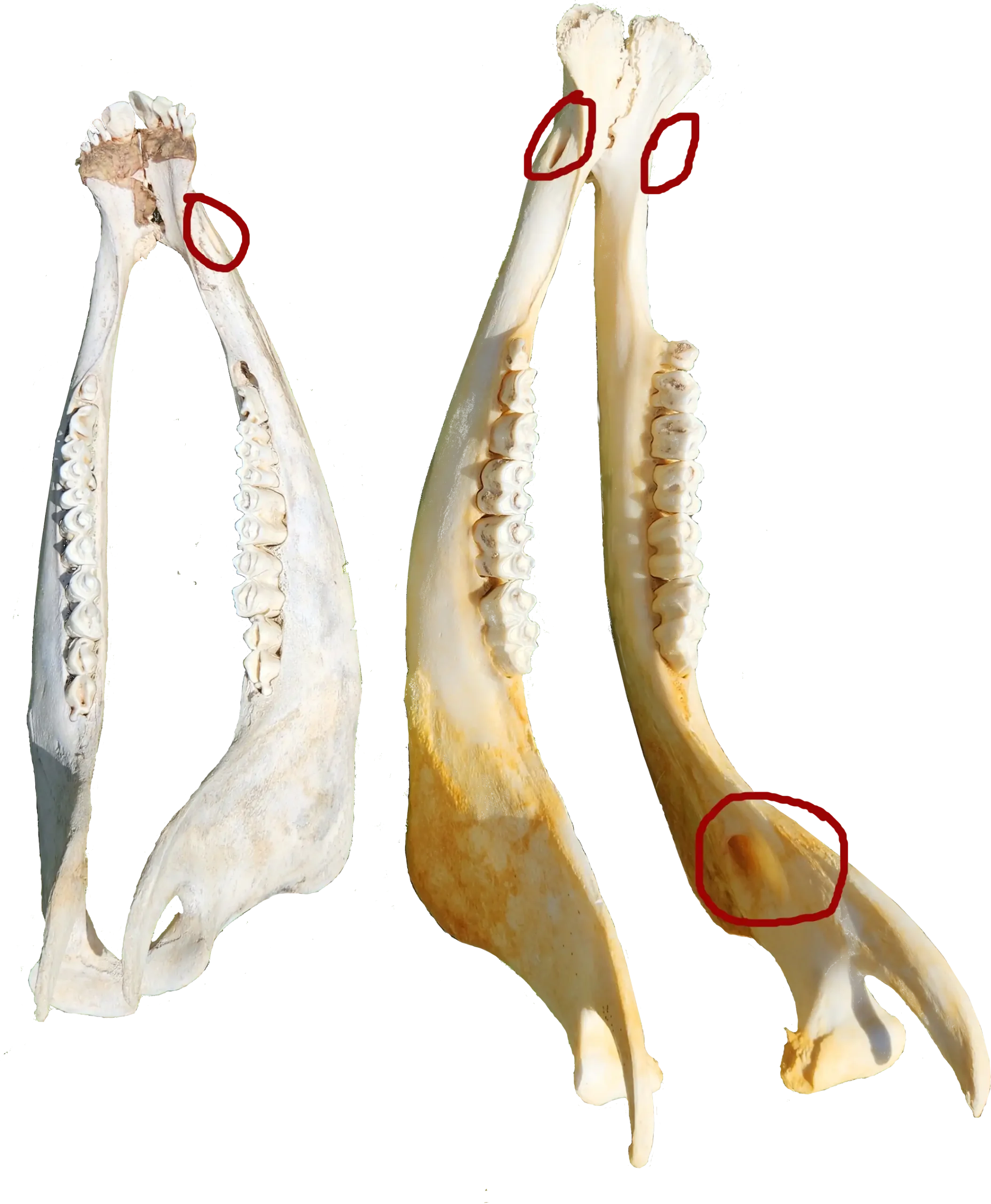
The older mandible is just as smooth as the young one, just bigger with age.
I asked LCT about the openings on the front of the skull because I notice they were all different and did they vary with age? I found that the supraorbital opening is a tiny feature found in the skulls of different mammals, including bison. It acts as a pathway for key nervous system and the circulatory system. This opening is situated in the frontal bone, right above the eye socket. In some bison, it might be a full opening, while in others, it could just look like a notch. The opening lets the supraorbital nerve, artery, and vein pass through. These structures are essential for delivering blood and sensory signals to the forehead, upper eyelid and horns. There can be variations in the presence and shape of the supraorbital opening among bison, just like in other species. Some might have both a opening and a notch on different sides of their skull. When I sprayed water in the opening, I saw the water exit in the horn core, much like the blood would flow. I noticed how different they were with each skull, no two the same. Some fewer holes or shorter valley below the opening.
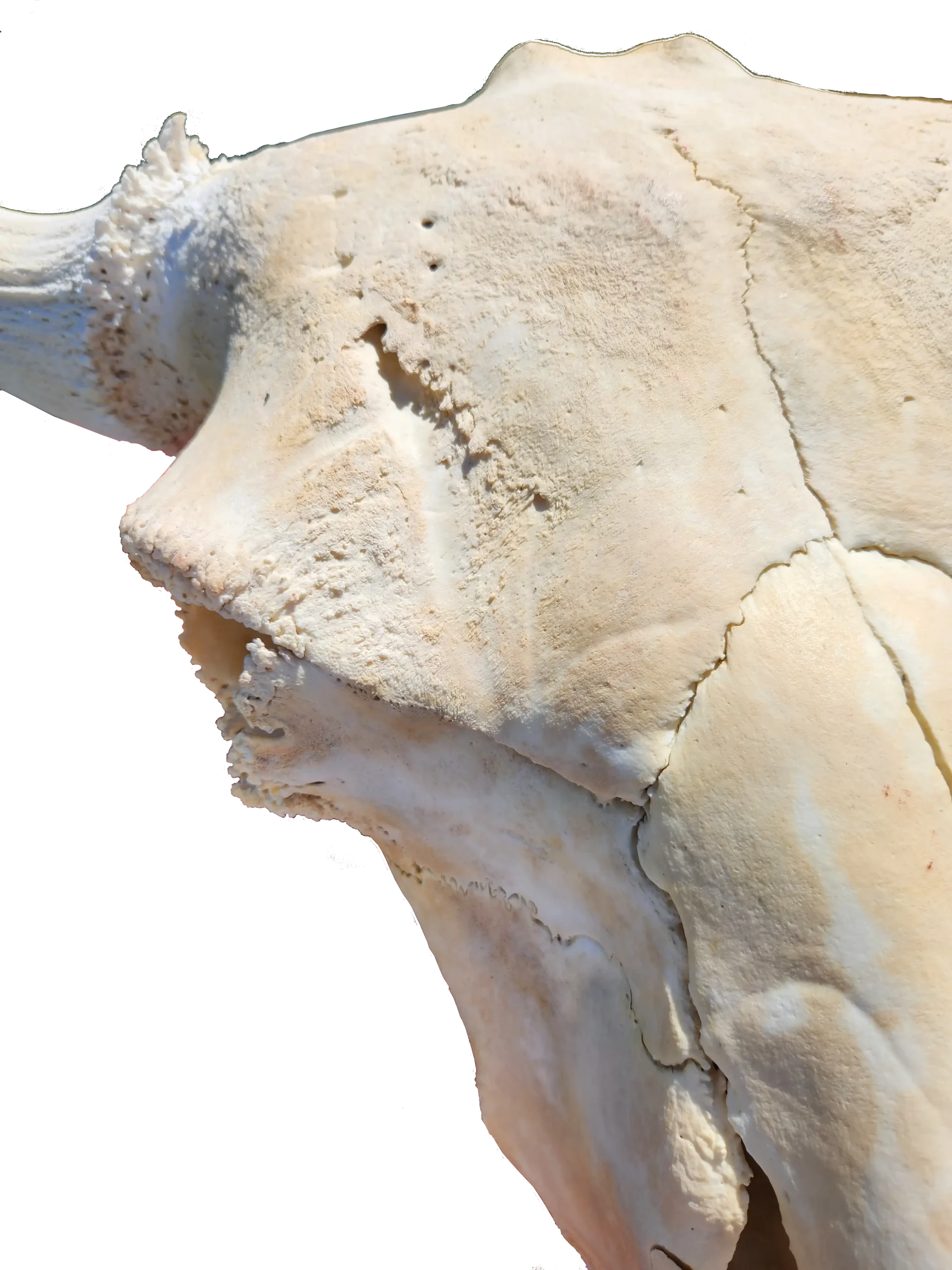
“The larger opening is typically associated with the frontal sinus system, which can expand and vary considerably between individuals and with age. At the same time, smaller adjacent foramina transmit blood vessels and nerves. These features do not change strictly linearly with age, but their size, number, and expression can reflect a mix of ontogeny, sex (especially in horn development), and individual variation. So yes—some of what you’re seeing tracks with aging, but it’s layered on top of normal anatomical variability rather than being a simple age progression.” L.C. TODD– Adjunct Professor
The opening between the eye and horn core, those vary with each animal and the small holes you see around that opening, I found no two the same.
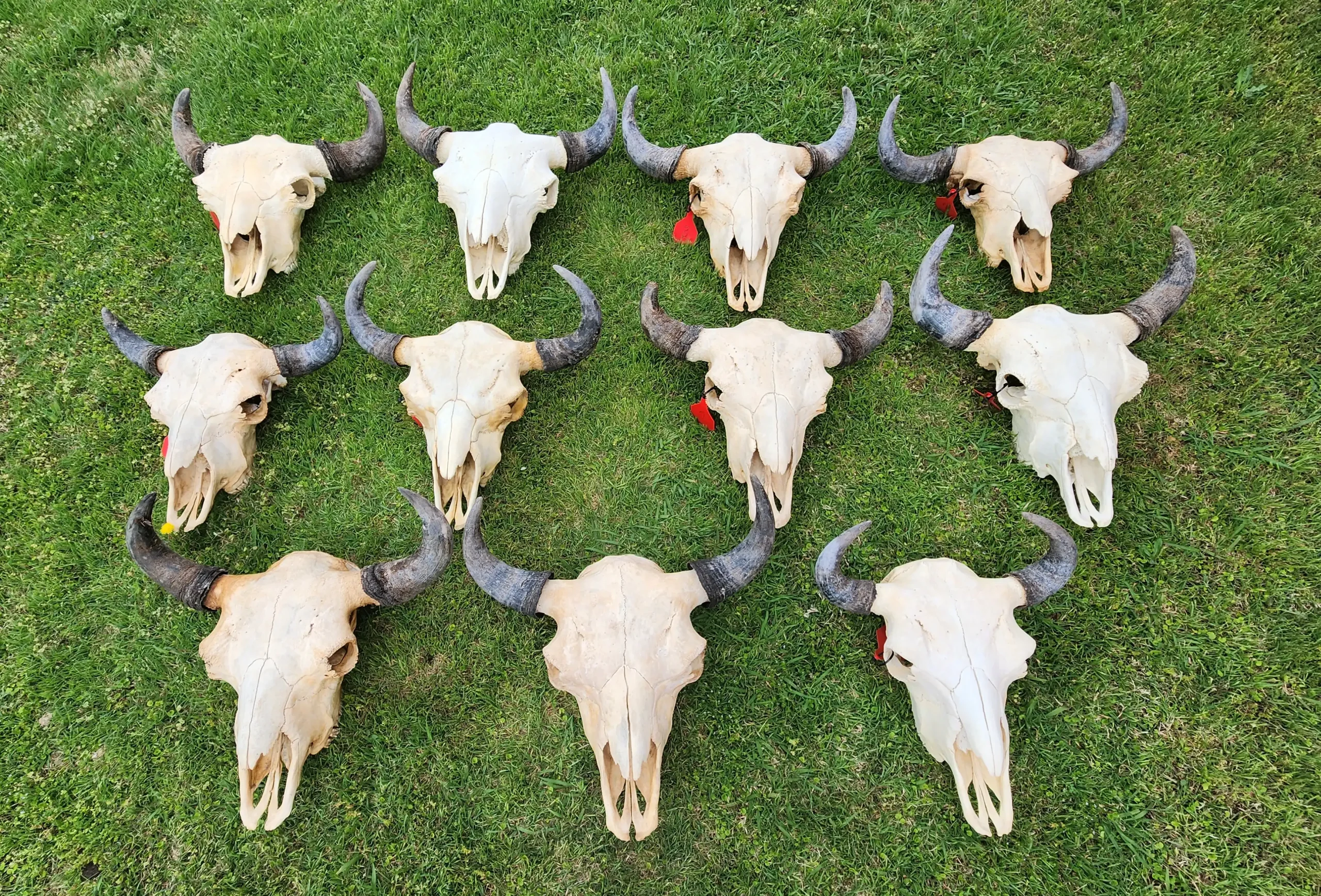
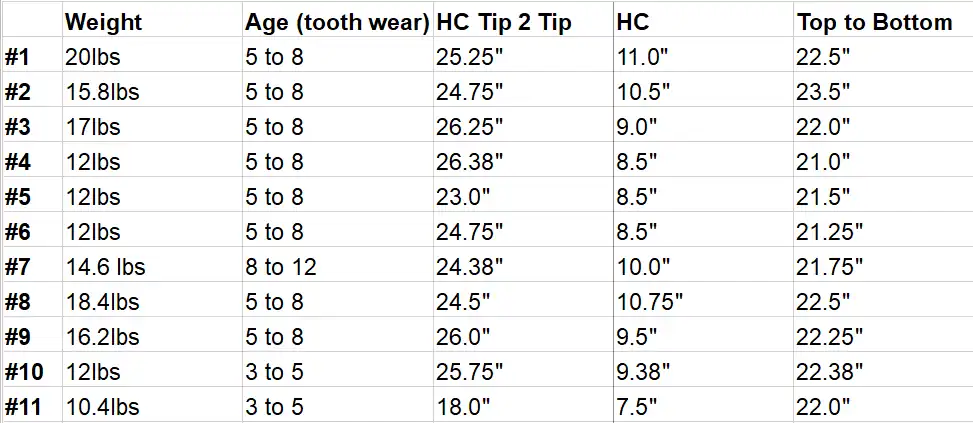
The Weight of the Skull: Age doesn’t seems to play much of a role in the weight of each skull. One weighs about 20lbs and he is not the oldest. The two lighter ones are younger and maybe haven’t reach their full growth. While the ones all of similar age vary considerably.
All these bulls are tagged and numerical order.
Aging Bison by their teeth. This can be tricky as well, but I think probably the more accurate. If you know what their forage intake was, how abrasive , their climate, soil types, avg feeding hours, seasonal changes, mineral content and tooth hardness then you can adjust that with the wear patterns you find and age accordingly. Not so simply is it!
Many thanks to L.C.Todd for all his help. 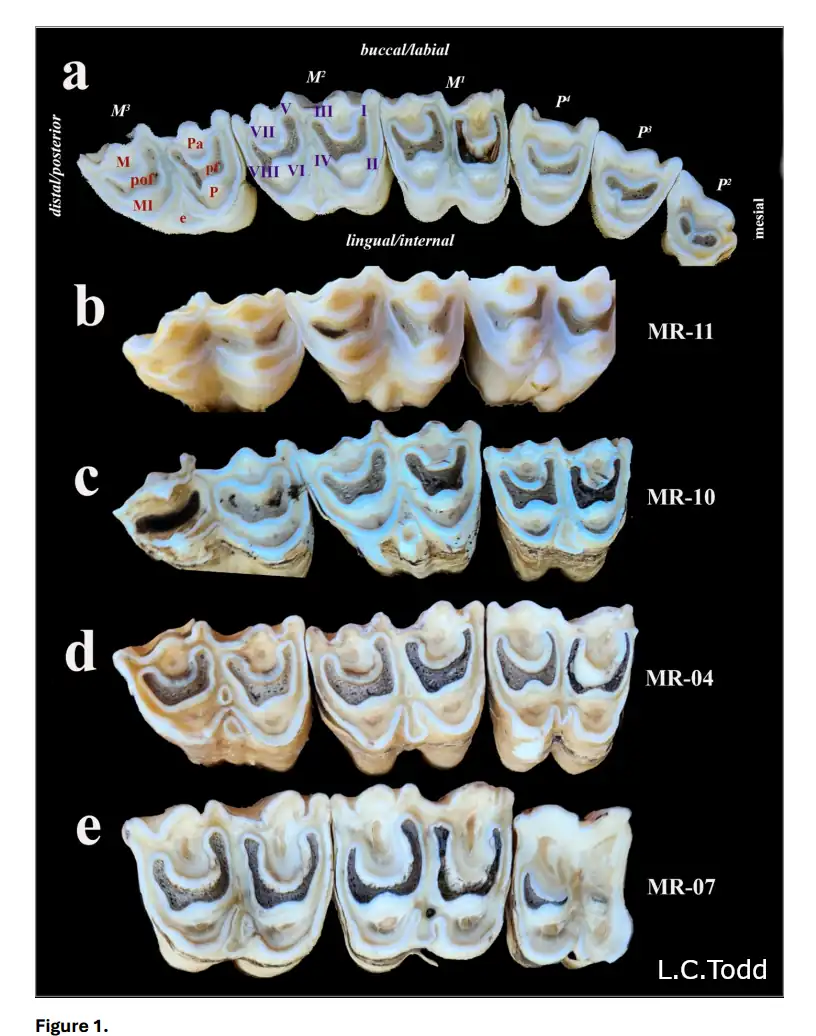
Figure 1. a) Cusp, wear facet, and orientation nomenclature for bison molars (occlusal view) (after Frison 1982e:Figure 4.14; see also Frison et al. 1976:Figure 8; Hill 2008: Figure 2.2). Upper left, right M 2 cusp and fossette designations: e (endostyle), M (metacone), Ml (metaconule), P (protocone), Pa (paracone), pf (prefossette/infundibulum), pof (postfossette/infundibula). Upper wear facet designations. Wear facets increase in posteriad direction; b and c) examples of youngest age range specimens (maxillary tooth rows 11 and 10) showing incomplete occlusal wear to M3 and limited endostyle wear and dental connection. The youngest specimen, MR-11, and M3 facets I-IV in wear, to facets V-VIII (V & VII and VI & VIII are worn but not connected) and there is no endostyle wear. MR-10 has slightly more advanced M3 wear, and also has endostyle wear on M1 (connected to main occlusal surface) and M2 (separate dentine ring); d) example of midrange, fully mature age range maxilla’s with M3 in full wear, distinct infundibula, and variations in endostyle wear; e) oldest specimen in the group (MR-07) show M1 wear beginning to obliterate the lower portions in enamel of the infundibula (mesial section mostly worn away) and with all three infundibula connected to main occlusal surface.
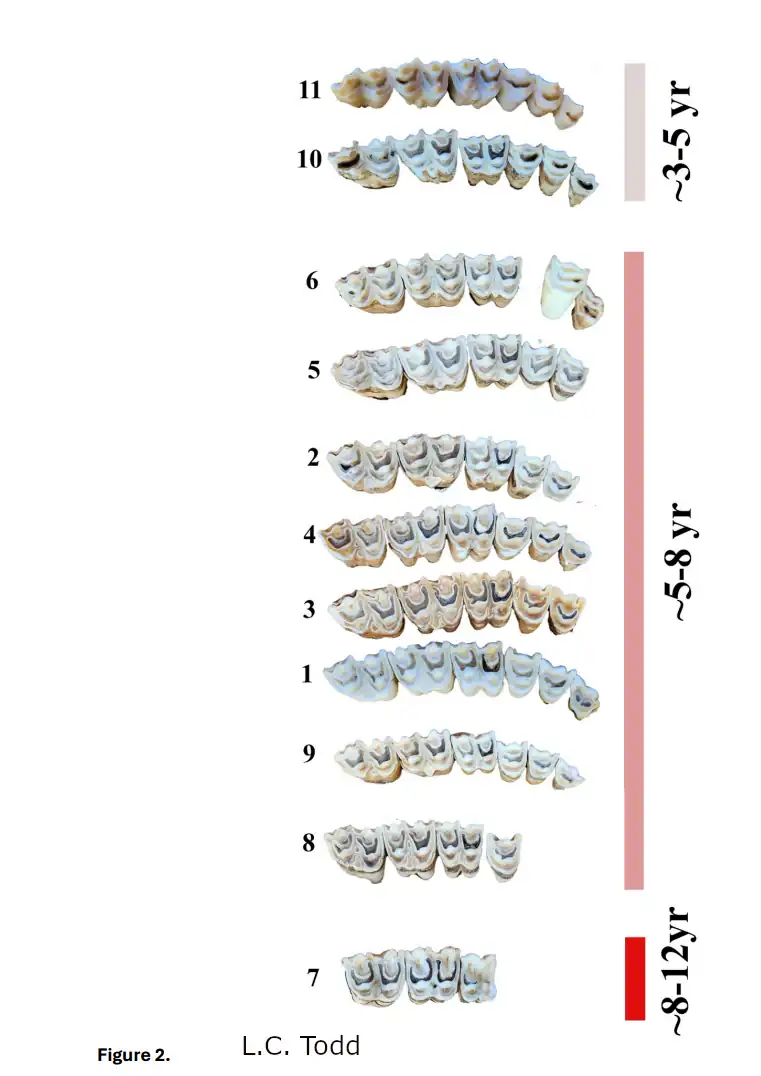
Figure 2. General maxillary occlusal surface age range estimates. Estimates are very generalized and subject to good deal of variation due to diet (enamel height metrics would be needed to help refine issues of individualistic dental structure such as infundibula variation in height and shape). There are two clearly younger specimens (MR 11 and MR-10) where M3 not in full wear that are likely in the 3-4 year-old age at death. Then, the majority of specimens fall into a prime adult age range. Finally, one older specimen (MR-07), show the beginnings of heavy wear associated with an older adult bison bull still with only M1 beginning to show advanced wear and other molars having several years occlusal functionality remaining. Note that age range estimates are approximate with the key separation being between the two younger specimens, the large group of prime adult bulls, and the single older individual. Those groupings are solid, with the year-range the less so.